Slip and Fall at Work
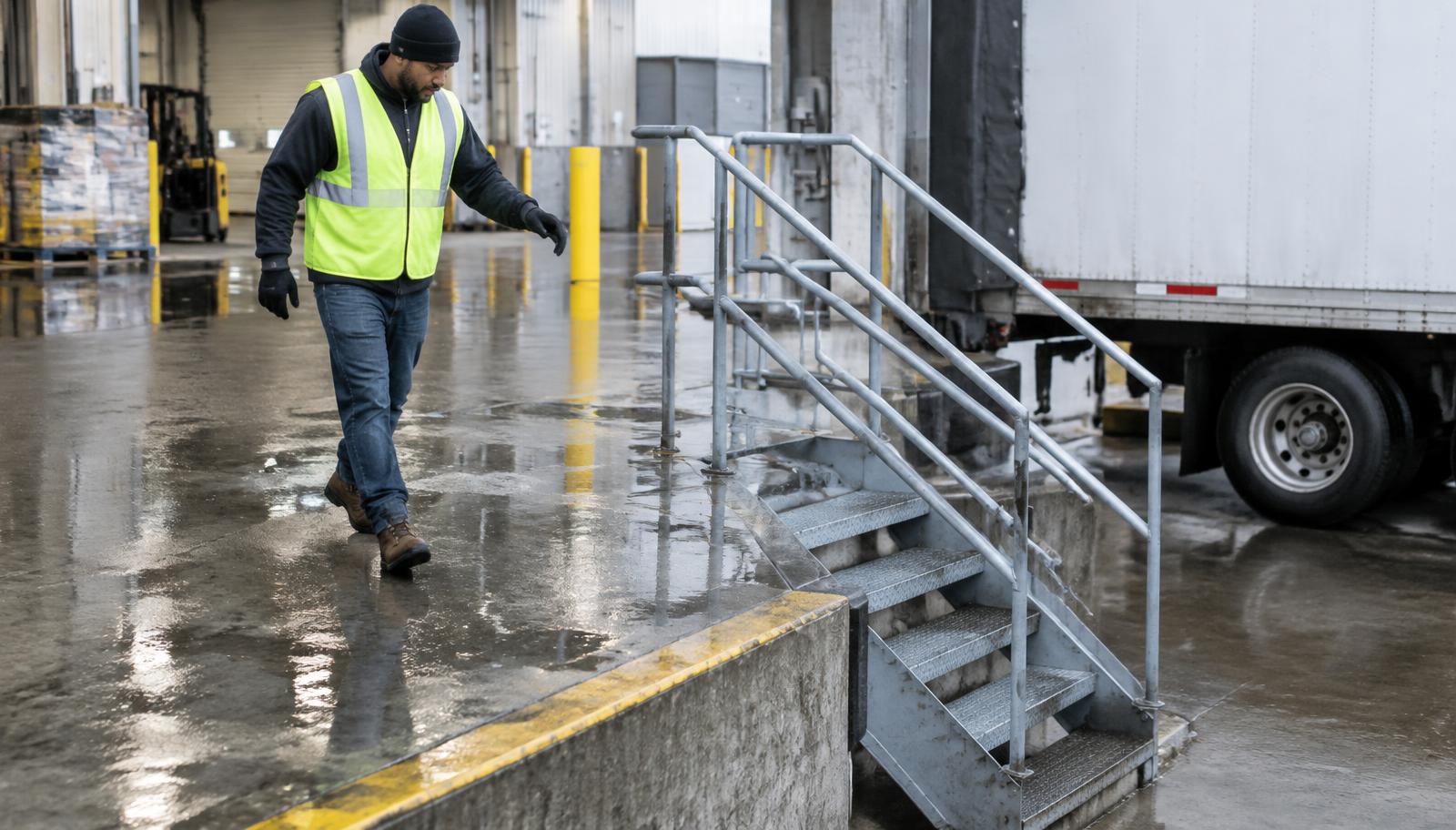
How falls happen on the job
Wet or greasy floors, winter ice in lots and on docks, cluttered walkways, uneven ground, stairs, ladders and stepping down from vehicles. A fall can injure several areas at once: the wrist and shoulder from catching yourself, the hip and tailbone from landing, the neck and back from the jolt, and the knee or ankle from the twist on the way down.
Symptoms worth getting examined
- Pain that shows up a day or two after the fall, not just immediately
- Neck or back pain, headaches, or dizziness
- Wrist, elbow or shoulder pain from bracing
- Hip, tailbone or knee pain with sitting, stairs or walking
- Swelling or bruising that keeps growing
What the first visit covers
- A history of the fall: what you slipped on, how you landed, what you felt and when
- A physical examination of every area you report, not just the one that hurts most
- A treatment plan written for your injuries and the work you do
- A work status note describing what you can and cannot do while you recover
- Referrals for imaging or pain management when the provider finds they are needed
Treatment after a fall at work
Falls often injure more than one area, so the plan addresses each in order of priority: reduce pain and protect anything the provider suspects is structurally injured, restore movement, then rebuild strength and balance so the return to work is safe. Chiropractic care and physical therapy are the core of the plan; imaging is ordered when the exam calls for it.
Your work status note
Restrictions after a fall commonly cover ladders, heights, lifting and prolonged standing. The note is updated at follow-up visits.
Common questions
I feel mostly fine today. Should I still be seen?+
Pain after a fall often shows up a day or two later. An exam documents the injury properly and catches problems early, and the provider decides whether imaging is needed.
Do I need my employer's permission to be seen?+
In general, Illinois allows an injured worker to choose their own physician. Telling your employer about the injury and where you are being treated helps the billing go to the right place.
Do I pay at the visit?+
For a covered work injury, the provider bills the employer or its insurer directly.
Request a Visit
We call back within 1 hour, or call (312) 847-2412.